How an Irish Pub NYC Experience Adds Charm to Any Evening
There are plenty of ways to spend a night in New York. You can chase reservations, stand in line for a rooftop, squeeze into a cocktail bar with a menu full of smoke and tinctures, or drift through another loud dining room where every table feels like it is trying to outshine the next. Yet for all the novelty the city offers, few evenings settle into memory as warmly as time spent in a good Irish pub.
That is not just nostalgia talking. The appeal is practical, atmospheric, and surprisingly durable. A strong Irish Pub NYC experience gives you something many nightlife spots struggle to provide at the same time: ease, character, and a sense that the night can become whatever you need it to be. It can start as a quick pint after work and end in a long conversation over shepherd’s pie. It can serve as a first date that never feels overproduced, a family dinner that welcomes all ages, or a rainy Tuesday refuge when Midtown feels especially gray.
The charm comes from more than Guinness on tap or dark wood interiors, though both certainly help. It comes from how these places shape a mood. They take the edge off the city without flattening its energy. They are lively, but not always frantic. Familiar, but not dull. Casual, yet rarely careless. In a city that can make even leisure feel scheduled, that balance matters.
The room does a lot of work before the first drink arrives
A well-run Irish pub in New York understands something fundamental about hospitality: people decide how they feel about a place before they speak to anyone. The room tells them. You notice the amber light first, then the worn timber, brass rails, framed mirrors, old signs, and the bar that looks built for leaning rather than posing. None of this needs to be theatrical. In fact, the best pubs avoid feeling like a set.
That distinction is important. There is a difference between a bar decorated with Irish symbols and a pub that carries the deeper logic of one. In the stronger places, the layout encourages conversation. The music supports the room instead of hijacking it. You can hear your friends without shouting, yet the space never feels silent. There is usually a mix of people too, office workers shedding the day, neighborhood regulars, tourists who got lucky, maybe a solo diner reading the room while finishing a bowl of stew.
New York has no shortage of beautiful venues, but beauty alone can feel cold. An Irish pub often trades sleekness for comfort, and that choice changes the entire night. It invites you to stay one round longer. It makes ordering dessert seem reasonable. It gives late arrivals a chance to slide into the booth and join without ceremony.
I have seen this play out repeatedly, especially with groups that were unsure where to meet. Pick a trendy spot and half the energy goes into whether everyone likes the concept. Pick a good pub and the concept disappears. People just relax.
Why the pace feels better than many other nights out
Part of the charm lies in tempo. New York rewards speed in almost every setting, but pubs are one of the last urban spaces that still allow for a slower social rhythm. You are not hurried through your pint. You are not expected to surrender your table the second the plates are cleared if the room is not slammed. Even when the crowd thickens, there is often a built-in patience to the place.
That slower pace changes behavior. Friends catch up properly instead of delivering compressed updates between glances at a reservation app. Colleagues stop sounding like colleagues. Couples get a setting where conversation can deepen without a whisper-only room forcing every silence to feel loaded.
A useful way to think about it is that many evenings in New York are event-driven. An Irish pub evening is mood-driven. You can arrive without a hard plan and still have a satisfying night. In practice, that flexibility is a major asset.
What that flexibility looks like in real life
- A solo pint can stay a solo pint, with no pressure to keep spending.
- A casual dinner can expand into coffee, whiskey, or another round without anyone needing to relocate.
- A group with mixed budgets can usually find something comfortable, from a beer and fries to a full meal.
- An early meet-up can naturally transition into a livelier crowd as the evening builds.
- A cold-weather night feels instantly more generous in a room designed for warmth.
That kind of adaptability is not glamorous on paper, but it is one reason these places remain useful year after year.
Food matters more than people admit
There is still a lazy assumption that pub food is secondary, something heavy and forgettable that exists only to support drinking. That is unfair to the better houses. In New York especially, where expectations are high and rents are punishing, any pub that lasts usually knows the kitchen cannot be an afterthought.
The classics carry real weight when done properly. Fish and chips should arrive crisp, not greasy, with batter that shatters lightly instead of slumping off the fillet. Shepherd’s pie should taste slow-cooked and deliberate, rich enough to satisfy but not so dense that it becomes punishment. A burger in a pub setting often works because the kitchen is aiming for comfort rather than reinvention. Soda bread, bangers and mash, roasted chicken, a proper chowder, or even a simple plate of sausages and mustard can anchor an evening better than a precious small plate ever will.
The best part is not merely the style of food. It is its emotional usefulness. Pub food gives a night structure. When people are hungry, they become impatient, indecisive, and strangely tense. A reliable menu solves that quietly. Even one shared order of fries or a bowl of soup while waiting for friends can steady the atmosphere.
This matters in mixed groups. Not everyone wants to drink much. Not everyone wants to pay for a multicourse dinner. An Irish pub usually offers enough range to absorb those differences gracefully. That inclusiveness is one of its least flashy strengths.
A pint is never just a pint
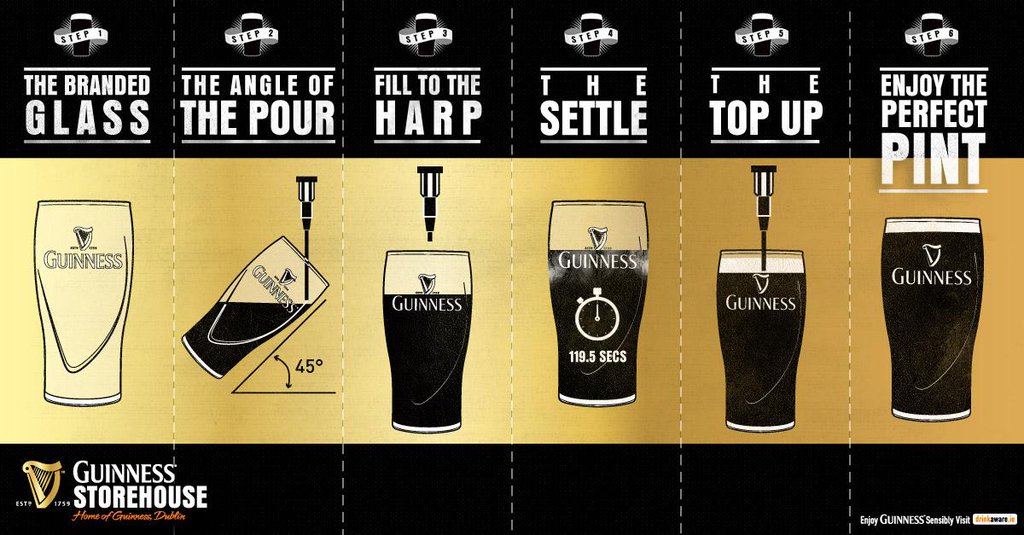
Drink culture in an Irish pub deserves more respect than it sometimes gets. Yes, the stout is iconic, and for good reason. A properly poured Guinness still has ceremony, and in the right room that ritual contributes to the evening. But the appeal goes beyond one beer.
A thoughtful beer program, a decent whiskey selection, sensible wine, and straightforward cocktails all help make the night feel open rather than niche. Someone can order a neat Irish whiskey, another can have a cider, another can ask for sparkling water and still feel perfectly at home. That is not true everywhere.
There is also a subtle relief in ordering from a menu that does not need to explain itself. Not every night calls for experimentation. Sometimes a familiar pint, served at the right temperature in a glass that feels substantial in your hand, is exactly what creates ease. Hospitality often lives in these small frictions removed. You do not have to decode the menu. You do not have to perform enthusiasm for ingredients you have never heard of. You can simply order what sounds good and get on with your evening.
For many people, especially after a long day in Manhattan, that simplicity feels luxurious.
Conversation thrives in places that are built for listening
An underrated reason an Irish Pub NYC outing works so well is acoustics, or more accurately, the social effect of sound. A strong pub is rarely silent, but it is also not trying to overwhelm you. The room hums. Glassware clinks. Music sits in the background. Someone laughs too loudly near the bar. A game may be on one television, but it does not have to dominate the room.
This creates ideal conditions for talk. Not formal conversation, not interview-style exchange, just real talk. The kind where stories stretch out, interruptions feel welcome, and a passing remark becomes the topic of the next half hour.
People often underestimate how rare that is in New York nightlife. So many venues are designed around spectacle, which can be fun in bursts but tiring over an entire evening. A pub gives social life a more human scale. It offers stimulation without overloading the senses.
I have watched shy people loosen up in pub booths in a way they never do in louder bars. I have also seen business acquaintances become actual friends over two drinks and a shared order of onion rings. Environment nudges behavior. A pub’s environment tends to nudge people toward sincerity.
The city outside makes the contrast even better
https://blogfreely.net/miliontesk/irish-pub-nyc-favorites-for-authentic-city-hospitalityPart of the magic is specific to New York. The pub does not exist in isolation. It works because of what surrounds it. Step in from a block of wind tunnels, sirens, crowded sidewalks, and office towers, and the change is immediate. The city sharpens the pub by contrast.
In colder months, this is obvious. On a raw November evening, the room can feel almost restorative. A coat comes off, cheeks warm up, glasses fog slightly, and the first sip lands with a kind of physical relief. But the effect is not limited to winter. Summer thunderstorms, spring drizzle, and those long dusky evenings in September all make pubs feel especially well chosen.
Neighborhood also changes the flavor of the experience. A Financial District pub at 6:30 p.m. Carries a different charge from one in the West Village or the Upper East Side. Midtown can skew brisk and transitional. Downtown may feel more boisterous and mixed. A neighborhood pub in Queens or Brooklyn might lean more local, with stronger regular culture and a touch less churn. Yet the core charm remains consistent: you get a pocket of steadiness inside a restless city.
Not every Irish pub is the same, and that is part of the pleasure
It helps to resist treating all Irish pubs as interchangeable. Some are serious about tradition. Some are sports-heavy. Some function almost like neighborhood dining rooms with excellent pints. Others are late-night magnets where music and crowd energy matter as much as the menu.
Knowing what kind of evening you want improves the odds of choosing well. If you are meeting older relatives, a pub with a quieter dining room and a broad food menu may be ideal. If you are heading out after work with six colleagues, a larger bar with room to stand and circulate may suit better. If you are planning a date, look for a place with softer lighting, strong service, and booths or two-tops that allow some privacy.
That judgment piece matters because charm is not automatic. A crowded, poorly managed pub can feel like any other chaotic bar. Service still has to be attentive. The room still has to be clean. The draft lines still need to be maintained. Bathrooms count. So does whether the kitchen can keep pace when the room fills up.
In practice, the best pubs tend to signal competence quickly. The host is calm. The bartender acknowledges you even if busy. The menu is edited instead of sprawling. The room feels lived in, not neglected. These are small tells, but they matter.
Live music, sport, and the art of giving people options
One of the reasons an Irish pub can carry an entire evening is that it often provides optional layers of entertainment without demanding that everyone engage in them equally. Live music is the clearest example. A solo guitarist, a fiddle session, or a modest trad set can deepen the mood when done with restraint. It adds life to the room. It can also go wrong if too loud or scheduled in a space too small for it. The better venues know the difference.
Sport works the same way. Plenty of guests enjoy having a match on somewhere in the room, especially if it creates communal energy without turning the entire place into a shout-fest. If a game becomes the focus for some tables while others continue their dinner undisturbed, the pub is doing something right.
This ability to host multiple versions of the same night is rare. One person is there for the music. Another is there for the steak sandwich. Another wants a whiskey and a corner seat. Another wants to catch the second half of a match. A good pub makes all of them feel sensible.
Dates, reunions, work nights, and those evenings with no real plan
The Irish pub setting travels unusually well across social situations. First dates benefit from a bit of built-in looseness. The room gives you things to notice without stealing focus. You can keep it short if the chemistry is not there, or stay for dinner if it is. That middle ground is valuable.
Reunions with old friends also shine in pubs because they do not require everyone to adapt to a new concept. Shared history tends to surface more naturally in a place that does not ask much of you beyond showing up. A pint and a plate of chips can unlock stories faster than a tasting menu ever will.
For work gatherings, pubs are often one of the safest bets in the city. They are social without being too intimate, and relaxed without feeling careless. Junior staff can order something affordable. Senior staff can settle in comfortably. People can leave at different times without disrupting the whole table.
Then there are the unplanned evenings, which may be where pubs prove their worth most clearly. A text goes out at 5:10 asking who is around. Four people answer. Nobody wants a complicated reservation. A dependable pub becomes the obvious solution, not because it is the most dramatic option, but because it gives the night room to develop. New York rewards dramatic options constantly. Charm often lives in the places that do not insist on drama.
What regulars understand that first-timers often miss
Ask people who truly love their local pub and they will rarely begin with décor. They talk about the welcome, the steadiness, and the feeling of being recognized without being fussed over. That is a subtle art. Good pub hospitality feels personal, but not performative.
Regular culture can also elevate the room for everyone else. A pub with loyal returning guests often has better social balance. There is less of the anonymous churn that can make a bar feel disposable. Staff know the cadence of the place. Regulars model it. Newcomers absorb it.
This does not mean you need to become a fixture to enjoy the benefits. Even a first visit can feel grounded if the place has a real center of gravity. You notice it in the way bartenders speak to guests, the way tables turn over without panic, the way solo visitors are neither ignored nor hovered over.
There is also comfort in ritual. Some people always order the same stout. Some start with oysters if the pub has them, then move to pie. Some prefer the early evening window, before the dinner rush fully kicks in. These habits are part of the pleasure. In a city that changes relentlessly, routine can feel almost radical.
A few practical signs you have chosen well
If you want the evening to land properly, a little discernment helps. Not every pub has the same strengths, and timing matters almost as much as location.
- Check whether the kitchen hours match your plan, especially on quieter weeknights.
- If conversation is the priority, arrive before peak crowd time or request a booth away from the main door.
- If the place is known for Guinness or whiskey, watch whether staff handle those staples with care.
- For groups larger than six, call ahead, because even spacious pubs can bottleneck fast after work.
- If live music is scheduled, confirm the start time so the room’s energy matches what you want.
Those details may sound obvious, yet they often separate a merely decent night from one people talk about later.
Why the charm lasts
Trends in hospitality come and go quickly in New York. Entire categories of nightlife rise, peak, and fade within a few years. The enduring appeal of the Irish pub comes from the fact that it solves old problems very well. People want warmth without fuss, good food without ceremony, drink without pretension, and a setting that flatters conversation rather than competing with it.
That is the real charm. It is not only about heritage, though heritage certainly informs the best versions of the format. It is about design choices, service habits, and social rhythms that make evenings easier and richer at the same time.
A memorable Irish Pub NYC night does not have to be extravagant. Often it is the opposite. A polished bar top, a well-poured pint, a plate set down hot, a friend arriving late and sliding into the seat beside you, the city still rushing outside while time inside seems to soften for a while. That combination has a staying power many newer concepts would envy.
When a place can host celebration, recovery, chance encounters, family dinners, after-work decompression, and aimless Wednesday nights with equal grace, it earns its reputation honestly. That is why the Irish pub remains one of New York’s most reliable forms of evening charm. It does not need to sell you on the experience. You feel it the minute the door closes behind you.
Hibernia Bar
401 W 50th St
New York, NY 10019, United States
Phone: +1 212-969-9703
FAQ About Irish Pub NYC
What is the best Irish pub in NYC?
The best choice depends on your location and preferred atmosphere. Hibernia Bar is a neighborhood Irish pub in Hell's Kitchen offering Guinness, Irish whiskey, pub food, and sports viewing.
Where do Irish people go in NYC?
New York's Irish community gathers in many neighborhoods and venues. Hibernia Bar welcomes Irish expats, local residents, and visitors at 401 W 50th St, just off Ninth Avenue.
Where can I watch GAA games in New York?
Hibernia Bar lists GAA among the sports it shows. Call +1 212-969-9703 to confirm coverage and opening times for a particular match before visiting.
What is the difference between a bar and a sports bar?
A sports bar emphasizes televised games and a shared viewing atmosphere. Hibernia combines sports viewing with the food, drinks, and hospitality of a neighborhood Irish pub.